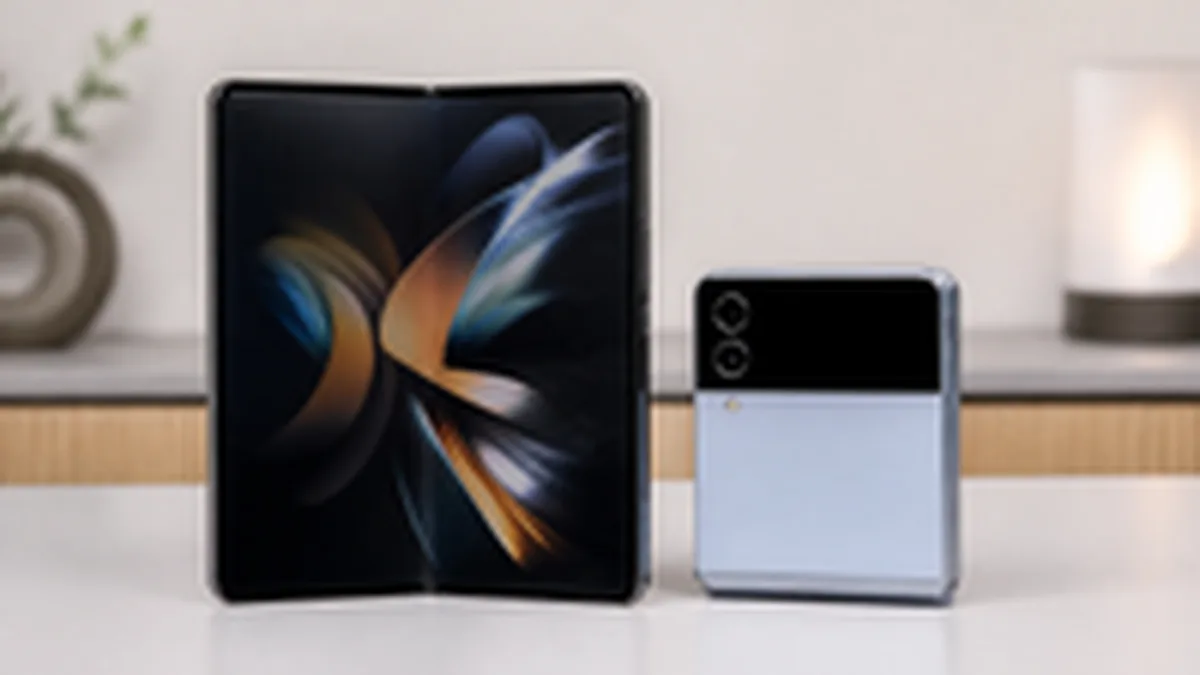
With Apple's iPhone Duo now shipping alongside Samsung's established Galaxy Z Fold line, foldables have stopped being a curiosity and started being a real flagship category at both of the two largest phone makers selling in the US. That raises a more useful question than "which foldable should I buy": should you buy a foldable at all?
The honest case for a foldable
A folding inner screen gives you a genuinely bigger display in a phone that still fits in a pocket closed. That matters most if you regularly do things a bigger screen helps with: reading long documents, multitasking with two apps side by side, taking notes, or watching video during a commute. If any of those describe your daily phone use, the format solves a real problem rather than just looking different.
The honest case against one
Three costs are real and worth weighing against the appeal. First, price: foldables sit at the top of each company's lineup, often $500 to $1,000 more than a standard flagship phone. Second, repair risk: a folding inner display is a more complex, more failure-prone component than a single sheet of glass, and early repair-cost reporting on first-generation foldable models has shown four-figure out-of-warranty repair bills are possible. Third, bulk and weight: even the thinnest folding phones are usually thicker when closed than a standard phone, which matters if pocket comfort is a priority for you.
A practical test
Ask yourself three questions. Do you actually use your phone for tasks that benefit from more screen space, not just tasks you could do on a bigger screen if you had one? Are you willing to add extended accidental-damage coverage and treat it as part of the purchase price, not an optional upgrade? And is the price difference between a foldable and a standard flagship phone one you'd barely notice, or one that would mean skipping something else you actually want?
If you answered yes to the first two and the price gap genuinely doesn't bother you, a foldable is a reasonable buy. If you're on the fence about any of the three, a standard flagship phone remains the lower-risk, lower-cost choice, and nothing about 2026's foldable lineup changes that basic trade-off.
What's actually new this year
What changed in 2026 isn't the core trade-off; it's that Apple entering the category with the iPhone Duo validates folding phones as a mainstream, not niche, product line. That's good news if you've been waiting for more competition and, eventually, more price pressure in the category. It doesn't mean the format has become cheaper or more durable yet. Judge the 2026 generation on its own reported specs and repair costs, not on the assumption that more competitors automatically means a more mature, lower-risk product.